Flying with Breast Milk: TSA Guidelines & Airport Travel Tips

Traveling as a pumping or breastfeeding mama adds a whole new carry-on to your list: your liquid gold. The good news? The rules are far friendlier than most moms expect, and with a little prep you can breeze through security and keep every precious ounce safe. Here's your complete, up-to-date guide to flying with breast milk in the U.S. — what TSA actually allows, how screening works, where to pump at the airport, and how to keep milk cold from gate to landing.
The Short Version: Yes, You Can Fly with Breast Milk
Breast milk is considered a medically necessary liquid by the Transportation Security Administration (TSA). That means it is exempt from the usual 3.4-ounce (100 mL) carry-on liquid limit. You can bring breast milk in "reasonable quantities" in your carry-on bag, and it does not have to fit inside your quart-sized liquids bag. Whether you're carrying a few bottles or a full cooler stash, it's allowed.
You Don't Need to Have Your Baby With You
This is the rule that surprises most moms: your child does not need to be present or traveling with you to bring breast milk, formula, or pumping supplies through security. If you're heading out on a work trip and pumping while you're away, you can absolutely bring your milk home. Pack it, declare it, and go.
Ice Packs, Coolers & Gel Packs Are Allowed Too
The accessories that keep milk cold are covered by the same medical-liquid exemption:
- Ice packs, freezer packs, and gel packs are permitted in your carry-on — even if you're not carrying breast milk at that moment (for example, on your outbound flight before you've pumped).
- If a cooling pack is fully frozen and solid when it reaches the checkpoint, it's treated like any solid. If it's partially melted, slushy, or squishy, TSA may screen it as a liquid and give it a closer look. Freeze packs rock-solid before you leave home when you can.
- An insulated cooler bag or a dedicated breast milk chiller is completely fine to bring through security.
How Airport Screening Actually Works
Knowing the process ahead of time takes away most of the stress:
- Tell the officer up front. At the very start of screening, let the TSA officer know you're carrying breast milk (and ice packs). This is your right, and it sets the tone.
- Remove milk from your bag. Take your bottles or bags of milk out and present them separately, similar to how you'd handle a laptop, so they can be screened on their own.
- Expect possible additional screening. Officers may test the containers with a bottle-liquid scanner or use test strips on the outside. In some cases they may ask to open a container or use "Explosive Trace Detection." You can politely request that milk not be X-rayed or opened, and TSA should offer alternative screening — though this may mean additional steps like a pat-down or screening of other carry-ons.
- Freezing your milk beforehand can actually speed things up, since solidly frozen milk is often quicker to clear than liquid.
Pro tip: give yourself a little extra time at security so you never feel rushed. A calm, informed mama sailing through the line is the goal.
Pump Straight Into a Travel-Ready Chiller
Skip the bulky cooler and loose ice packs. The Ceres Chill breastmilk chiller keeps milk safely cold for up to 24 hours in a single leak-proof stainless-steel container — you can even pump directly into it and carry it right onto the plane. Use code NursingMoma to save.
Shop Ceres Chill Chiller →Where to Pump at the Airport: Mamava Pods & More
Airports are far more pumping-friendly than they used to be. Many major U.S. airports now have Mamava pods — freestanding, lockable private booths designed specifically for nursing and pumping. Inside you'll typically find a bench, a fold-down table, a mirror, and an electrical outlet, and you can locate and unlock the nearest pod using the free Mamava app. They're a game-changer compared to hunching over an outlet at the gate or squeezing into a restroom.
If your airport doesn't have a Mamava pod, look for a dedicated lactation room or "nursing suite" (federal law now requires many U.S. airports to provide a private, non-bathroom lactation space in each terminal). Airport information desks and airline apps can point you to the closest one. When all else fails, a hands-free wearable pump lets you pump discreetly at the gate under a nursing cover.
Pumping On the Plane
You're allowed to pump on board, and a battery-powered or wearable pump makes it easiest since not every seat has a reliable outlet. A few tips for a smoother in-flight session:
- Choose a window seat for a bit more privacy, and bring a nursing cover if it makes you comfortable.
- Charge your pump fully before you fly and pack a backup battery pack.
- The lavatory works in a pinch, but it's cramped — many moms simply pump in their seat under a cover.
- Store the milk immediately in your chiller or cooler once you're done.
Keeping Your Milk Cold From Gate to Landing
Temperature is everything when you're in transit for hours:
- Freeze what you can. Frozen milk buys you the most time and clears security fastest.
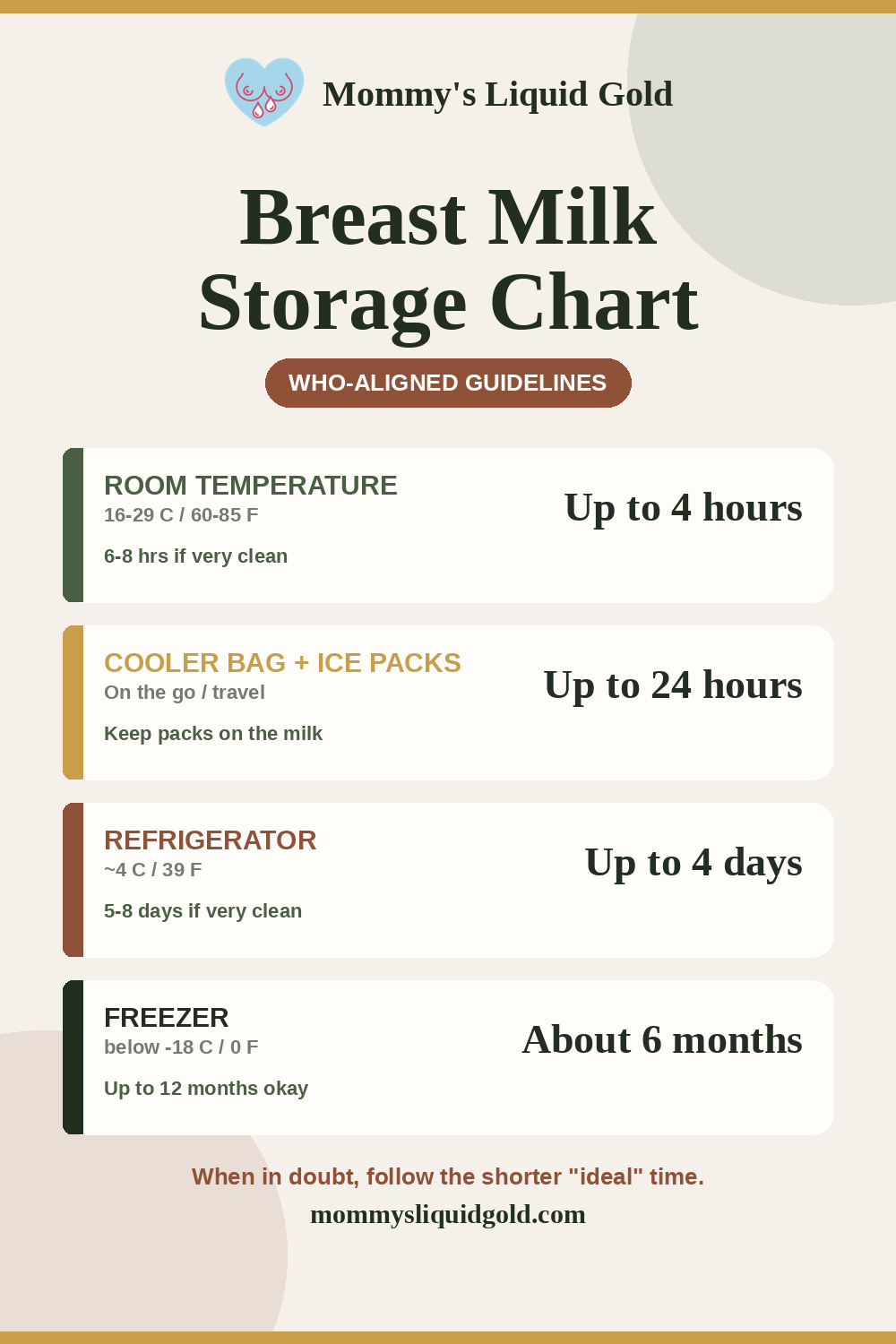
- Use a quality insulated cooler with solid ice packs. A well-packed cooler keeps expressed milk safe for up to 24 hours — enough for most travel days.
- Ask for ice on the plane. Flight attendants can usually give you a cup or bag of ice to top up your cooler on long flights.
- Refrigerate on arrival. Many hotels offer in-room mini-fridges or will store milk for you — call ahead to confirm.
Once you land, use our breast milk storage guidelines to know exactly how long your milk is good for in each situation.
 Save to Pinterest
Pack Your Stash in Travel-Smart Storage Bags
Purpose-made storage bags freeze flat, seal tight, and label easily — perfect for a compact, leak-free travel stash. Zomee Breast Milk Storage Bags are pre-sterilized, BPA-free, and built to lie flat so they thaw fast and fit any cooler. Use code NursingMoma to save.
Shop Zomee Breast Milk Storage Bags →Shipping vs. Carrying Your Milk
If you're away for several days and pumping a large volume, carrying it all can get bulky. Milk-shipping services (which send you an insulated box with dry ice and overnight it home) are a convenient alternative for work trips. That said, for most short trips, carrying your milk in a good cooler is simpler and cheaper — and it never leaves your sight.
International Travel Notes
The U.S. TSA rules above apply to security at U.S. airports. When you're flying internationally, remember:
- Other countries have their own screening rules. Most are accommodating to breast milk, but limits and procedures vary — check the security authority for your departure country before you fly.
- Declare milk at customs if required; breast milk for personal use is generally allowed, but rules on quantity can differ.
- Plan for longer transit times and pack extra ice packs, since layovers can stretch your cold-chain window.
Your Quick Airport Checklist
- Pump, cooler bag or chiller, and solidly frozen ice packs
- Extra storage bags and a marker to label with date/time
- Your pump's charger plus a backup battery
- The Mamava app downloaded to find nursing pods
- A little extra time at security — and confidence in your rights
Travel with Confidence
Flying with breast milk is completely doable — the rules are on your side. Declare your milk, keep it cold, take advantage of Mamava pods and lactation rooms, and lean on your cooler or chiller to protect every ounce. You've got this, mama.
Getting ready for your trip? Compare travel-friendly pumps in our guide to the best breast pumps, read our hands-on pump reviews, and grab deals on coolers and bags on our coupons page.
This article is for general education and is not medical advice. TSA policies and airline rules can change — always confirm current guidelines with TSA and your airline before you travel.
Looking for the right pump?
Compare our top breast pump picks for every budget and lifestyle.
See the Best Breast Pumps